I’ve been following Desolation Plains for several years now and it’s safe to say that with each album release there is an implicit layer of musical growth as well as an expanded improvement with regards to musical composition. On the latest album, ‘Celestial Sorcery’, there is a profound range of audial eloquence that I’ve not heard in a long time. These tracks flow seamlessly as if a spacial void was vastly penetrated by composite modulations destined for distant stars. This album as a whole is like one massive meditative simulation that draws the listener in without hesitation and then proceeds on a spectral trip down a medieval – yet futuristic – passage of infinite dreams and illustrious oblations. Without a single debacle across these eight tracks, Desolation Plain presents thirty two minutes of fascinating canticles that gratifying and completely mesmerizing.
Dreamy album opener, “Altar Of Eltanin (Prelude)” gets things going with an enthralling sequence of lush keys and dark ambient hums. A soft cadence kicks in and layers of sonic synths collaborate in victorious fashion. “Astral Draconic Worship” begins with somber modulations that could easily place the listener in a hypnotic state. Radiant tones and beats follow almost immediately, creating an enchanted space for Medieval doings. Synth leads dominate the track and imply a battle-ready environment and a quest for ascendancy. The excitement continues as “Forgotten Shards of Thuban” spews forth a retrospective groove that could have easily been a part of the Stranger Things musical universe. Synth leads sound heavily reverberated, producing a thick atmosphere of electronic greatness. Next up is the powerful, “Rising Tides Of Eternity”. This track rages with melody and ethereal vibes that create a calming ambience that is a joy to soak in and listen to. Clean synth leads merge seamlessly with the backing sounds generating a smooth montage of tones that is instantly enjoyable. “Neon Druids Of Gamma Draconis” is a whimsical piece that introduces capricious loops, elongated cords, and rhythmic percussion patterns that come together harmoniously! Some of the reverberated tones are stringent and truly represent the emotional context of Medieval times. “Moonstone Dagger Rituals” reminds me of Cosmic Terror-era Varkana and that’s not a bad thing. As a matter of fact, that’s one of my favorite Dungeon Synth albums of all time. The lush key tones, echoing keys and sonic soundscapes complete this amazing track. This is probably my favorite track on the album and sort of summarizes the whole musical concept of the entire outing. “Creatures Of Moonlight” has a very nostalgic tone of late 90’s, early 2000’s synth music. The pensive instrumentation is very refined in style and everything mixes extremely well through the song. The final track is the eerily somber, “Star Magic Ascension”. There is a strong melancholic vibe that creates a pleasant context for this musical journey finale. The backing percussive elements are different but mesh well with the overall atmosphere of the track. This is a fitting way to end this immersive experience full of meandering electronic transmissions and vast soundscapes.
Desolation Plains is one of those projects that gets better and better with each release. With already a strong discography of six releases, the sky is the limit for this incredible act. From the songwriting and instrumentation to the excellent production effort, ‘Celestial Sorcery’ is already a top contender for my “Best of 2026” list. I know there is still a lot of time left in this year but I continually come back to this album on a regular basis. I highly recommend this if you’ve not already checked it out. Definitely check out the rest of the discography as well.
Please Like/Follow my blog so that you’ll get first hand updates every time I post a review. Thanks for visiting the Dungeon!!
When it comes to Dark Ambient music, long form tracks (and albums) almost immediately grab my attention. There is something about tracks with epic lengths that pique my interest as they allow for meditative expansion, curiosity arousal, and the ultimate setting for imaginative story telling. One artist that is dependable in that area is BlackWeald from Hungary. Extensive song lengths are a normal endeavor for this project, as well as delivering massive albums. ‘666 Minutes In Hell’ from 2021 clocks in at over 11 hours and ‘The Fermi Exhibit’ is over 5 hours long. If these don’t serve as a audial storyboard platform for your senses, I’m not sure what will. In addition to that, the artist Old Crypt (also from Hungary) has over 20 releases – mostly consisting of single tracks that are around (or over) the 1 hour mark. When the two projects are combined, the result is the massive ‘Ahtola’ album – 3 tracks with over 3 hours of imposing drones that will surely captivate the senses. In Finnish mythology, Ahtola is an underwater sea castle and home of Ahti, the god of the sea. Musically, these tracks serve as a soundtrack for an allegorical voyage of discovery of the unknown and the dreadful encounters along the way. A voyage to expose this apocryphal location for the sake of possible existence. Played at full length, without breaks, will submerge the listener into this passage that will ultimately prove there will never be another contingent expedition of this nature ever again.
At just under one hour and fifteen minutes, lead off track “Ahtola”, is a mammoth of an album opener. Commencing with a vaporous drone that complements hollow sounding synths, as if they were recorded in a distant vessel that is slowly disappearing in the darkness of thick fog, these sounds emit a particular radiance that is certainly fitting for the theme of this album. At about five minutes in, grim effects begin to take shape, promoting a dreadful presence of something supernatural. As the search for Ahtola continues, the minimalistic vibe of this track continues to expand slowly and effectively, like an impenetrable darkness full of looming shadows. Pulsating percussive elements begin to form, like a welcoming committee from an ancient, uncivilized tribe. At just over the sixteen minute mark, a thunderous modulated drone all but drowns out the previous audial dialogue. As we approach the halfway point, the glow of ominous drones and effects completely overpower all mental faculties and continue to immerse the listener into an unexplored world of aquatic dreariness. As we continue on to the final minutes, it’s clear that this track has successfully laid out the scope and mission of the remainder of the album and their is no escaping the overall sinister tone of the subject matter. “Ahtola, Sunken Ruins” is an eighty one minute voyage into the prodigious world of maritime obscurity. Heavily reverberated tones – akin to space ambient tidings – emit a feeling of pure relaxation, but with a sense of harrowing dread lurking close by. The sounds of distant thunder adds a sense of foreboding naturism and space water droplets offset that with an ataractic sensation of mild unrest. Throughout this long player, menacing drones rotate through various octaves to complement the assorted elements that coincide with fantastical tale that radiates through this entire album. Additionally, various beastly noises declare a lurking presence that is downright evil. Even though this track has an enormous time span, the introspective experience that is validated throughout is well worth it. Even though the final track, “Ahtola, Desolate Sanctum” is the shortest song on the album, it still clocks in at a hefty forty six minutes. As if this is the grand finale of the Ahtola expedition, aggressive tones begin almost immediately and elude to an imminent danger that can only be expressed with bleak audial vision. As this song weaves through elements of obscure synth pads and assorted soundscape, the feeling of apprehensive emotions take shape and this dark realm is taken to a whole new level of apocalyptic dread. As we approach the end of this huge, phonic undertaking, a distinct closure is presented during the albums final minutes. Cogent drones are met with flowing accuracy and then are ultimately matched with an unexpected guitar riff, depicting a haunting conclusion to this immense sea-worthy adventure.
The best aspects of BlackWeald and Old Crypt collide on this colossal Dark Ambient offering that will definitely appeal to listeners of minimalistic, epic-sized ambient music. It’s extremely easy to get lost in these three tracks and the value of the listening experience is well worth it. ‘Ahtola’ is a mythical story worth telling and this droning musical format is optimal for its portrayal. Both BlackWeald and Old Crypt are artists worth checking out and the quality of their discographies are excessively satisfying. Be sure to add ‘Ahtola’ to your list of albums to check out and support these projects at the links below.
Please Like/Follow my blog so that you’ll get first hand updates every time I post a review. Thanks for visiting the Dungeon!!
The amount of releases put out by Altrusian Grace Media is incessant. From full audio books covering a myriad of subjects and esoteric music collections to ominous dark ambient recordings from the distinguished project, Psyclopean, the assortment of output is sure to grab anyone and everyone’s attention. In addition to all that, patrons are graced with a number of exclusive releases for those that join the Starry Wisdom Cult. One of the latest audial offerings is, ‘Into A New Dark Age’ by Psyclopean, a dismal single track that spans almost thirty minutes, and presents a nightmarish spectacle of retro synth impressions with Berlin School sequences and foreboding drones.
Opening with a cold, dark drone sound that slowly fades in, presenting an anxious catapult into unknown sounds and mythical panorama. Layers of Berlin School progression and soothing synth chops begin to play with ethereal results, drawing the listener into an extended realm of endless audial possibilities. As if playing on a loop, this section has a hypnotizing effect and then slowly fades out to a tranquilizing drone. At around the six minute mark, an eerie spoken word bit is summoned, followed by a harmonized chant passage. This is soon accompanied by a thumping bass effect and continues on for a few minutes, emitting a grandiose and ritualistic effect. Soon after, a retrospective acoustic guitar melody begins to play a smooth riff and is backed by a synth lead that takes us back to a 70’s progressive rock synth tone. This segment presents a heavily reverberated soundscape that is sonically monumental. At around thirteen minutes in, heavy industrial effects emanate a dystopian theme of chaos and darkness. Hollowed drones and elongated synths take over and allow for an echoed synth lead to pervade through. This slowly crevasses into a more somber piece but with a melodic synth tone of mythical proportions. At just under the nineteen minute mark, space ambient drones become the dominant texture with immense, planetary elements. The last five minutes of the track returns to a retrospective synth sounds, removing the sense of claustrophobic sensations and abrupt panic. Instead, alleviating synth patterns provides an elegant yet caliginous desire. Haunting chants and spoken word bits return to close out the track as if concluding a reverent journey through space, time and harrowing mythos.
‘Into A New Dark Age’ is the 22nd official release from Psyclopean and the audial luster still shines through with nostalgic ambient precision while exuding modern soundscape elements that submits the listener into ravishing sonic realms. Having one epic-length track – especially in the ambient genre – is the perfect environment for the listener to escape reality and embed themselves into the track and experience the music as intended. Just in case the music doesn’t fully satisfy that reality withdrawal, check out the full length video below and experience the visual representation of this magnum opus. Psyclopean remains consistent with delivering immersive electronic music and ‘Into A New Dark Age’ just may be one of the projects best releases yet. Highly recommended for fans of space ambient and ritualistic drones.
Psyclopean – Into A New Dark Age
Please Like/Follow my blog so that you’ll get first hand updates every time I post a review. Thanks for visiting the Dungeon!!
One of my favorite exploits of 2025 was the DIY Sessions presented by the UK based Dungeon Synth Label, Sokol Keep. These session afforded various artists to record tracks (or albums) in an authentic, old-school format so that credible material could be delivered with true, Medieval intentions. One project that contributed to these sessions (that immediately grabbed my attention) was Blades Of Folmär. Hailing from Devon, UK, Blades Of Folmär combines vintage recording aesthetics with an elemental Dungeon Synth essence that summons the true nature of the ancient spirit. Assembling a pair of releases that pay homage to the immutable past of bloodstained keeps, grueling battles, daunting castles and enchanted forests, they provide an authentic, audial journey of the dark ages. ‘Eternal Dungeon I & II’ betoken a glorious quest for honor, crimson crusades and an age of dark exploration.
Eternal Dungeon (Feb 2025)
Eternal Dungeon commences with the abbreviated intro, “Quest Of Heroes”. Immediately showcasing a muddled, lo-fi production, with slightly reverberated synths, a particular homage is paid to the ways of old, crafted with Medieval integrity. “The Dungeon Goes Ever On” continues the ancient cadence and adds a spectrum of melody that exudes a tranquil precedence, combined with gloomy synth tones and haunting atmospherics. “Beware, The Servants Of Morcar” clocks in at almost eight and a half minutes and consistently produces a ghostly sound throughout as the darkened synths parallel ambient textures that are both pastoral and somber. Occasional percussive elements are inserted throughout that contribute in a boastful way. The final track on this offering is “Star Of The West”, a lighthearted anthem that is a fitting bookend to the album opener. This is exactly the sound I imagine could be played in an isolated dungeon, deep below the surface of a far away kingdom.
Continuing where the first album left off, “Eternal Dungeon II” produces that classic Dungeon Synth experience across four amazing tracks. Beginning with “The Moonlit Portcullis”, forlorn modulation integrate with a murky production for a pristine, authentic sound. The looming melody that is present throughout creates an alluring atmosphere that is extremely enjoyable to listen to. “To Dine In Carrion Halls” includes a thumping drum beat, regulating a haunting cadence that is reminiscent of a funeral procession, sauntering down muddy trails in the dead of night. “Gurrok Cairn” is a seven and a half minute darkened offering that combines ambient structures with elongated synth tones, evoking a daunting tale of bloodshed, damned battlefields and a triumphant return to a victorious kingdom exclusively seen through a black and white lens. The final track, “Glademist”, is a brief oblation that perfectly closes the album in true Dungeon fashion. Brief and to the point, nostalgic synth chops are a true testament to the authentic sounds of this canticle seemingly purloined from the Middle Ages. The gritty production is a convincing attestation of what Blades Of Folmär set out to achieve, to present true Dungeon Synth songs with a classic embrace.
Blades Of Folmär has taken complete advantage of the Sokol Keep DIY Sessions by releasing two amazing Dungeon Synth albums, ‘Eternal Dungeon’ and ‘Eternal Dungeon II’. Even though each album forges its own path to age-old glory, together they present an audial unification that pays homage to everything we love about the Medieval dynamism. From dirge-like cadences to battle ready synth intonations, these albums are a perfect precedent of old-school dungeon synth. Not only are these two albums amazing but all of the other DIY Sessions offerings are worthy contributions to the Dungeon Synth genre. Don’t pass on these albums and prepare for an ancient battle while hearkening on the prodigious anthems contained within.
Please Like/Follow my blog so that you’ll get first hand updates every time I post a review. Thanks for visiting the Dungeon!!
After a lengthy hiatus, I’m finally back in the Dungeon (in Deep Space, of course) and ready to provide my analysis and opinion on the great genres of Dungeon Synth, Dark Ambient and anything in between. For my first post-hiatus offering, I’d like to spotlight the ‘Shrouded’ trilogy by Everyday Dust. Focusing on minimalistic soundscapes and audial designs that are reminiscent of retro adventures and blissful morning decadence, Everyday Dust transcends the typical Dark Ambient outing with a fresh take on sound manipulations, solid use of loops and a combination of musical ideas that extends beyond a single genre. Below, I will summarize my thoughts of each album and hope that you’ll check them out as well.
Shrouded I (2023)
The 2023 release that began this amazing trilogy, set the tone right away with retrospective variations and haunting melodies that cultivate a rich tonal texture of relaxing soundscapes. “Broken Wings” is a pleasant album opener that provides a virtual backdrop of an avant-garde soundtrack for a utopian, yet visionary audial design. Continuing with “Evensong”, Everyday Dust sways to a dissonant realm of exotic rhythms and reverberated loops. This creates a blissful adventure through lethargic dreams and peaceful endeavors. Skipping over to “Distant Lanterns”, we find a more spacial approach with looming drones and cosmic intonations. The final track, “Solus” is a jovial offering that encapsulates the overall vibe of the album. Definitely ending on a high note, ‘Shrouded’ sets the stage for two follow-up albums that do not disappoint.
‘Shrouded II’ begins with the nostalgic, “Who Built The Chimes?”. Audial hisses and looping cracks present a lo-fi setting for the deluge of sounds that are contained within. “Horns Sound As The Haar Surrounds” continues with the grungy production sounds but with more of a minimalist radiance. Various sounds and cryptic noises radiate throughout this crack, producing an eerie offering that easily captivates the listener. “The Jackalope Whisperer” is the darkest track on the album with its bleak atmospherics and demented sound bites. At just under 15 minutes in length, this canticle plays on the psyche with a variety of emotional changes and hypnotizing, yet protracted modulations. The final track, “Thorns”, delivers a nefarious experience with malevolent tones, ominous atmosphere and despondent pitch changes. Although it continues the same sentiments as the first album, it’s delivered with a darker, deeper prospective.
In 2025, Everyday Dust delivered the final installment of the harrowing trilogy with ‘Shrouded III’. Immediately commencing with the dystopian thriller, “Make No Bones”, it explores the outer realms of space ambience with planetary clamor and peaceful drones. “Sentinel” follows with the sounds of tape hisses in the background with heavily reverberated synths, producing a striated track full of turbulent intentions. “Heresy” is another dismal offering with its glooming, apocalyptic resonance that mimics what one may hear during a grueling nightmare. With the time span of just over 12 minutes, this effort creates an uneasy adventure that cannot be avoided. The final track on the album (and of the trilogy), is the maniacal, “Smokescreen”. As with the case with any finale, incandescent modulations pulsate with dreadful intensional, producing an all-encompassing array of looping timber with somber soundscapes that conclude this obscure yet magnificent trilogy of recordings.
Spanning three years, the ‘Shrouded’ trilogy, presents a fantastic audial adventure that is both retrospective and modern. As with the old “create-your-own-adventure” books of decades past, these albums allow the listener to dwell deep into their own minds to construct a voyage that can be both unique and audacious. Everyday Dust have gone above and beyond with these recordings and have produced something very special that will definitely stand the test of time. Each of these albums deserve repeated listens and new elements are sure to be gained every time someone connects with these songs.
Please Like/Follow my blog so that you’ll get first hand updates every time I post a review. Thanks for visiting the Dungeon!!
When it comes to Dark Ambient music, the name Onasander should come up when discussing the modern chieftains of the genre. With a consistent amount of captivating releases as a stand-alone producer, as well as a consistent contributor to many other releases, this is an artist that must not go overlooked (or unheard). With a new magnificent album (‘Dawn Metrics’) just released yesterday on the mighty Winter-Light label, Onasander is out to prove that his unique brand of dark, audial visions are as good as they come. I recently had the opportunity to interview the mastermind behind this great project and learn what the driving force behind his reign of terror is. Hope you enjoy this as much as I did putting it all together!
1. Thanks for taking some time out of your schedule for this interview. You’ve been busy this year with some amazing releases. Let’s start with ‘Under Unknown Stars’ released on Dark Odyssey Records. How did that album come about?
The idea for “Under…” came from my passion for Alien movies, not just the original quadrilogy but also the prequels. I thought of creating a space horror story using the sound of Onasander. I’m quite satisfied with the result.
2. With the space theme of this album, were there certain techniques you relied on to create suck a dark, immersive atmosphere?
In my opinion, the use of synths like the ASM Hydrasynth and the Waldorf Iridium, in combination with various software, made all the difference.
3. How do you know when a track has been completed and it’s time to move on to the next one?
Usually, my work sessions are short. If a track works, I stop working on it and let it sit for a few days. Then I come back to listen to it.
4. Congrats on your collaboration release with Alphaxone, ‘Futuristic Dereliction’, out now on Cryo Chamber. How was this experience working with one of the (other) greats of the Dark Ambient genre?
Mehdi is a great musician, perhaps the greatest in space dark ambient currently around. You can learn so much from him, and every time you listen to one of his elaborations, you’re literally blown away.
5. This album has such a broad sound that covers a large realm of the soundscape spectrum. What was the focus of the music on this release?
A dystopian vision of the future that touched on different genres and different sonic contaminations (like cyberpunk, for example); I think it’s very common in more modern dark ambient.
6. Whose idea was it to incorporate the Berlin School sequences on the track, “Time Fracture”?
Honestly, it was Mehdi’s great idea. In that wonderful track, I contributed by giving depth with the drones in the background.
7. Another release from earlier this year was the collaborative powerhouse, ‘Animic Atmospheres’, featuring yourself, Ashtoreth and Gydja. How did this creation come about?
The idea for Animic Atmospheres came entirely from me as a big fan of theosophy and anthroposophy, especially the works of Rudolf Steiner. I then chose some musician friends who were very close to an “esoteric” sound and definitely of a very high level.
8. There are some really dark tones on this album, dare I say ritualistic even. What inspired the bleak, tonal passages throughout this recording?
Definitely the idea of the relationship between man and the cosmos, theorized by the father of anthroposophy. We are nothing but “a thought that is thought” by unknown cosmic entities…
9. Throughout your recording career, what role has sound improvisation play?
It has played a predominant role. And it still does. I don’t consider myself a musician but a lover of sounds that I use to express what I have inside.
10. Do you already have a good plan, or set of ideas ready to go before you begin recording each album?
Sometimes it can be a book you’ve read; other times, a movie. Suggestions can come from literature, philosophy, or cinema. Very rarely do they come from other listening experiences.
11. Are there any specific synths or sound processors that are essential to your sound?
Yes, I use several synths like the ASM Hydrasynth, the Waldorf Iridium, the Moog Subharmonicon, Korg Modwave and several SOMA instruments.
12. How do you balance darkness with musicality in your compositions?
For me it’s pretty simple, since my idea of sound is essentially based on dark atmospheres.
13. How does your background or personal experiences help shape your music?
Very little, I would say. My personal experiences are quite distant from my idea of music.
14. With each recording, is there a specific story you’re trying to tell with your music?
For some records, I would say yes, like for “Under Unknown Stars,” for example. For others, they are just philosophical concepts put to music (“Cosmic Extinction”).
15. Is there a particular artist that influenced your passion for Dark Ambient music?
There are so many artists that I love but if I had to choose just one, I would say without a doubt Collapsar.
16. What are some things you hope to achieve with future projects or albums?
I hope to improve the sound I have in mind more and more; that is, to give a sound to the darkest aspects of the cosmos.
17. How important is performing Dark Ambient music in a live setting? Is this something that is a priority for you?
I don’t find it that important but I would love to play live.
18. What can we expect to hear from Onasander in the years to come?
Currently in my mind there are two orientations: that of “Under Unknown Stars” and that of “Cosmic Extinction”. My future sound starts from these two albums that I adore.
19. I really appreciate you taking the time to answer a few questions for The Dungeon In Deep Space. Are there any final words for those that will be reading this publishing?
I want to thank The Dungeon In Deep Space (this name is beautiful!) for hosting me and all those who have supported and continue to support Onasander and the side projects. Thank you very much!
It’s that time of year again, our favorite holiday is upon us. Of course, I’m talking about Halloween, and The Dungeon In Deep Space is back for the sixth installment of the All Hallows’ Eve Extravaganza. In a continued effort to bring you a few summary reviews of this years’ audial frights, I have selected five new releases that will do Halloween proud. Each of these recordings would make the perfect companion to you Hallows’ Eve scares. I hope you will enjoy these as much as I have and please support these amazing artists, as they continue to bring the best in dark music excellence!
1. Halloween Scene – The Last Trick Or Treater
Halloween Scene, the spooky, seasonal side project of Guild of Lore, is back for a second nightmarish installment of creepy soundscapes. Playing more like a soundtrack to a 80’s horror flick, ‘The Last Trick Or Treater’ comes packed with evil haunts and retrospective modulations. Each track precisely elicits a sense of fear as an anomalous entity stalks trick o’ treaters on All Hallows Eve. Some of the more terrifying tracks include, “Bad Things Between Backyards”, “Something In The Mist On Reaper Road” and “This Long And Frightful Night”. At nearly one hour in length, this is the perfect companion piece to your ghoulish encounters on Halloween. My favorite song on the album has to be “Show’s Over”. With its retro electronica vibe and tasteful usage of Berlin School sequences, it screams 80’s B-movie horror. Halloween Scene certainly knows how to create an audial encounter for the most menacing nights of the year and I’m here for it.
Just in time for Halloween, the ever-so-reliable (and consistent) force of nature known as Erythrite Throne has unleashed ‘Strigoic Myths’, a five track excursion through the darkest points of your imagination. From the seasonally-themed logo to the solid color album backdrop, you know the darkened season is upon us when Erythrite Throne graces us with this combo. As for the music, it’s everything that you’d expect from one of the Godfathers of Dungeon Synth; desolate synths, impending beats and a slab of melancholic darkness that would prepare even the ghoulish of entities for All Hallows’ Eve. The best example of this comes by way of the second track, “Tenebrous Whispers From The Night’s Fog”. Commencing with a looping, mesmerizing beat, Medieval incantations soon follow by way of haunting, modulated synths. As the song intensifies, periods of melodic wonder increases, thwarting this track into the catacombs of great bleakness. We can always count on Erythrite Throne to deliver the goods and this album is a stark example as such.
Mombi Yuleman, the distributor of all things dark electronica is back with a collection of Dark Ambient soundscapes, previously released on various collaboration albums. ‘Tales Of Lost Transmissions’ is the first of a two part series that focuses on the assemblage of early recordings and rarities and it’s just in time for Halloween. Producing a Sonic range of material from Dark Ambient to Psytrance and Synthwave, this material of a culmination of Dark Ambient tracks that emit an eerie resonance while paying homage to 80’s horror soundtracks. So far, my favorite track is “Ominous Hazards” with its completely retro vibe, thunderous synth pad arrangement and electrifying Berlin School sequences. Another favorite is “The Madness Of Alhazred”, as it absorbs classic B-horror movies aesthetics and adds a modern Dark Ambient twist – complete with haunting vocal samples and spooky narrations. This would be a great album to play loudly while handing out candy to the costumed humanoids. When you’re done playing this one, queue up the second album in this series, ‘Tales From A Darkened Corridor’, you won’t regret it.
Hours Of Worship is back with their multi-genre offering, ‘Death & Dying Vol. II’. Aggregating facets of Dungeon Synth, Gothic and Darkwave, Hours of Worship is making a bold audial statement that is equally fascinating as it is addicting. With a dreamy production and retrospective sound mix, the six tracks contained within compels the listener through a surreal journey of darkness and dismal proportions. Most of the tracks are hypnotically lethargic, like a slow emotional decay while offering a few upbeat songs that continue to be melancholic at the same time. Standout tracks include “Derelict And Ruined” and “Opaline Ashes”, while “Shattered In Aspect” is reminiscent of a track that could have been a part of The Silence Of The Lambs soundtrack – which isn’t a bad thing because that’s one of the greatest psychological thrillers of all time. In summary, I can’t recommend this masterpiece enough. If you love the musical aesthetics of the aforementioned genres, then definitely do not pass on this release.
Born From Pain is an unusual entity that resides on the outside of a variety of dark electronic genres. The project also has the dismal vision of rescoring classic film score to a more modern, gloomy output. This Halloween we are presented with a Dark Ambient rendering of the 1932 film, Vampyr. Consisting of four, foreboding modulations that intertwine possessed tape loops and ghastly soundscapes, this is a droning experience that exhibits an angst filled void where there is no escape. The final track on the album, ‘Here, In Seclusion’ is a near fifty three minute long journey through the macabre, where desolate ruins provide the abhorrent landscape for a one-way trip to hell. The lo-fi production also adds a layer of dread, enhancing the repulsive nature of this audial dive to deep, distant voids. Born From Pain never fails to deliver and the projects vision of extreme musical obscurity makes this a promising album.
Over the past few years, Arbadax has become one of my favorite Dungeon Synth artist. With each release bringing an amazing venture down a dark realm filled with fantasy-based themes and intriguing musical intonations, Arbadax excels at releasing consistent music that is bound to connect the listener to a fascinating, Medieval world. I recently had an opportunity to talk to Arbadax about his wonderful discography of Dungeon Synth greatness, where the inspiration came from and the direction for future releases. Please enjoy this interview with the prodigious Arbadax!
1. Thank you very much for taking the time to answer a few questions about the Arbadax Dungeon Synth project. How did you first get introduced to dungeon synth as a genre?
Thank you and the friends at The Dungeon in Deep Space for the interest you’ve shown! For years, I was unaware of the existence of the genre itself, even though I knew about artists more closely tied to the metal scene, like Burzum, Mortiis, Summoning… The real discovery happened during the COVID lockdown, when I was stuck at home due to restrictions, spending time playing music, listening to music, and working on building my small home studio. The memories are already blurred by the passage of time, but the first DS record that struck me straight to the heart was Hole Dweller’s ‘Flies the Coop’. From there, a whole new world opened up for me to explore. At the same time, I also regretted not discovering this genre earlier, because who knows, maybe I would have started making this music much sooner… But perhaps the time wasn’t right yet.
2. Do you see Dungeon Synth as a subgenre of ambient, black metal, or something else?
More or less, we all know how it originated; its roots run deep in black metal, but after so many years, I think we need to give DS the proper dignity it deserves, as far as I’m concerned, it’s a genre in its own right. What I found when I approached this world was a mature and grown-up scene, still confined to the underground and the limbo of amateur musicians, but in my view, it’s absolutely right to define it as its own genre.
3. Who are some of your musical influences, both within and outside of Dungeon Synth?
I was born a metalhead, and I still am one. I’m currently a bassist in a band called Heavenfall, and I used to play in an epic metal band, Holy Martyr, so my main influences are the entire hard ‘n’ heavy world, mostly classic, hard rock, epic metal, thrash metal, and to a lesser extent, other metal genres as well. To complement that, I’d also mention classic rock from the last century. I’ve also always listened to instrumental compositions, especially soundtracks, classical music, and some of the most famous musicians who made electronic music popular, like Jarre, Vangelis, and I’d also like to mention the Italian Franco Battiato, who experimented with synths in the early 70s. Recently, with my interest in DS, I’ve also gotten into other electronic genres, like ambient or synthwave, for example. On my YouTube channel, I’ve published a few synthwave-oriented songs, which I usually do between albums to take a break from the DS atmosphere and reset my mind.
4. When it comes to thematic expression, Arbadax has released some amazing albums in the realm of Medieval fantasy. What role does fantasy, mythology, or history play in your music, if any?
Clearly, my love for fantasy is evident in my storytelling, which focuses on the character of ‘Arbadax.’ More generally, I’ve always been passionate about the fantastic in a broad sense, and also about the mysterious. I’m deeply fascinated by the world of the occult, even though this fascination is in constant conflict with my rational side. This attraction to the fantastic and the mysterious is a very human, primal component, but then there’s the adult me, an engineer no less, with years of scientific studies behind me, who says, ‘Hey, you know all of this is nonsense, right?’ This also ties into my passion for ancient and modern history, its mysteries, its conspiracies, its horrors… the epic and the mythology. It’s all connected. In the end, fantasy is nothing more than the story of humans living in a world truly shaped by their mythology, beliefs, and folklore. I’m fascinated by the bestiaries of various cultures, and sometimes I’m amazed by how imagination can conjure up such incredible creatures with extraordinary powers and strength. It would be fun to live in such a world, and that’s why I enjoy talking about it. When I created the two more medieval-oriented albums, I was undecided about starting a separate project under a different name. But in the end, I continued as Arbadax and incorporated “The Bard’s Tales” and “The First King” into Arbadax’s storytelling, as if they were tales of the mythology and past history of the island of Ankmar.
5. What do you think makes Dungeon Synth so unique compared to other ambient or electronic genres?
What sets it apart is a raw sadness and a gritty darkness that I don’t see in other genres. For example, ambient music is relaxing, and synthwave music is usually cheerful, with positive or ‘comfy’ vibes, as they say nowadays. But when you listen to DS music, you’re catapulted into a sonic dimension that takes you to other levels. Even comfy synth, which might not have that sad and dark note, transports you into a world where the musician wants to guide you (and I could mention Hole Dweller again in this regard). Perhaps this is also a characteristic of the genre: the listener lets the musician guide them into their world. A song title or even a brief bit of storytelling is enough to make it work. This is obviously what I’m trying to do as well.
6. Dungeon Synth often evokes the essence of nostalgia. How do you capture that feeling in your music?
Musically speaking, I like to write pieces that sound sad, and to do this, I usually rely on minor modes, technically speaking. However, it doesn’t mean that if I write melancholic-sounding pieces, I’m feeling that way myself. In fact, sometimes it’s the opposite—the music, as I write it, brings out certain emotions. It’s an equal exchange with what I’m creating.
7. How important was it to capture that on your first album, ‘A Sad Story Of Blood And Love’?
This was the first album; we were in the middle of the COVID era, locked inside for months, and in the album, I conveyed this sense of sadness, abandonment, and melancholy. The compositions were very minimalist and stripped down, and it naturally made me think of something terrible like war and a story of passion ending in blood. Then maybe there’s something personal as well, who knows?
8. Do you prefer your tracks to have more of a lo-fi or raw sound, or do you focus on more polished production?
So, this also seems to be quite a debate among DS fans, right? Probably, if I could afford it, I would go to a studio to work with a sound engineer or producer to get the best out of the tracks. But perhaps, at that point, it wouldn’t be DS anymore; it would become something else, because everything would be wrapped in a nice layer of sound, with bright dynamics and clear, well-balanced tones. I try to do the same on my own, on a smaller scale, often without consulting anyone. What comes out in the end is 100% mine, but I’d definitely be very curious to hear one of my albums professionally produced at a high level.
9. Your third album, ‘The Land Of Ankmar’ shows an incline in musical growth. Do you feel as if your comfort level in the genre was getting better at this point?
Let’s say I really started to enjoy myself. There was a period when I spent almost all of my free time writing music, recording, and jotting down ideas. I still have about a hundred riffs recorded on classical guitar, waiting to be developed. During that time, I also invented an alphabet that would be the alphabet of Ankmar and laid the foundations for its language. I was completely immersed in inspiration from all angles. It was also a period when I started studying piano and became interested in the basics of mastering and mixing techniques, but I eventually stopped due to lack of time. This project also marked a break from my previous work because it doesn’t represent the typical ‘journey’ theme of fantasy stories, but simply a description of my imaginary land, Ankmar, which is partially connected to Sardinia, where I was born. For example, ‘The Ruins of Karahal’ refers to the ancient name of the city of Cagliari, which was called Karalis in Latin. Or the sound of the sea in ‘The Grand Sea’ was recorded on a beach in Sardinia.
10. Your seventh album, ‘Lost’ is one of my favorites by you. The music is as relaxing as it is imposing. How do you balance simplicity and complexity in your music?
It is said that life requires balance, but man is not perfect and is in an eternal struggle to find balance in everything he does, in every emotion, and in every relationship. Sometimes genius is found in a person’s imbalance and madness, but I don’t think that’s the case for me because I’m a fairly rational person. Therefore, in my music, balance is still given by the sensations I feel. Often, I find myself adding instruments and overlapping harmonic lines in a compositional high, but then when I listen back the next day, I start to remove things, bringing the piece back to its simplicity and keeping only the parts that still sound good to me and that don’t alter the essence of the piece.Or it can just as easily happen the opposite, meaning that a piece that started off simple can then develop in an incredible and unexpected way. You know, sometimes when I listen back to my old tracks, I find that I absolutely don’t remember how I came to develop them in that specific way.
11. Do you incorporate live instruments into your recordings, or is it all digital/synth-based?
First of all, you should know that I’m not very good at playing the piano or keyboard. I usually write pieces on guitar or bass, then I take everything into MIDI and from there, I develop the piece by adding and removing until I feel it’s complete. So, it was inevitable that sooner or later, I would reach the point of adding something different, especially because I often feel the need to find new sounds. In ‘The Land of Ankmar,’ for the first time, I used an acoustic guitar, while in ‘Winds of War,’ I recorded bass and electric guitar with my Fender Precision and an Ibanez guitar. At that time, I was in an ‘epic metal’ phase; if I remember correctly, the war in Ukraine had just broken out or was about to break out, and I was angry. Subsequently, in my other works, I sporadically used the acoustic guitar, especially in the two projects with medieval sounds. I always think that sooner or later, I’ll make another album in the style of ‘Winds of War,’ with bass and electric guitar, because I had a lot of fun making it!
12. On your eighth album, ‘The First King’, there is again, another shift in musical focus as the tracks seem more melancholic yet more developed and powerful. How has your sound evolved since you first recording?
I had a lot of fun creating many harmonic lines on this album. There are some long and intricate pieces, with key changes and varying themes. This is definitely something I didn’t do in my earlier works, which may have been more repetitive, but you know, it also depends a lot on the mood and the types of sounds I use. With medieval orchestrations, there’s actually a lot of space in the mix to create many harmonies, while using fat pads like in ‘LOST,’ which occupy a lot of space in the frequencies, there’s much less room to develop harmonies. In any case, I like to frequently change the type of sound and song development, as I did with the latest album.
13. Your latest album, ‘The Necromancer’s Swamp’, is a short collection of fun tunes that are very eclectic. What was your vision with this album?
Originally, the tracks were created with the intention of doing something different from everything I had done before, and I started working on this album convinced that I would integrate it into the storytelling of the island of Ankmar. Then I was contacted by the label HDK to write five pieces to be published on a cassette alongside three other musicians, and so the composition took a different turn to follow the storytelling of the short narrative provided by HDK. I slightly modified the pieces by adding sounds and noises and replacing the percussion with pads that, in my opinion, give that eclectic touch you mentioned. Those tracks seemed perfect to me for telling a story of black magic and necromancy.
14. Do you see Dungeon Synth as a form of escapism for yourself? What do you hope that your listeners get out of your music?
Certainly, yes! I think all forms of art are like that. It starts with passion, and then when you delve into the art, you discover that it can also be a great way to unload your problems or transfer them into it. In a broader sense, there’s also the fulfillment that creating something of your own gives you, like when I made the physical copies of the cassettes, taking care of the artwork, the recording, and the preparation of the cassettes myself.
15. Can we expect any new releases from Arbadax this year? Do you plan to incorporate exciting new directions or experiments?
At the moment, I’m working again for HDK, this time for a full release, although I’m not sure when it will be ready, because in the coming months, I will also need to enter the studio with my band. Recently, I have actually slowed down my production pace, so we’ll see. I have a lot of ideas in my head that I would like to explore sooner or later… I’m always thinking about starting a project exclusively focused on historical themes, as well as the science fiction that I love so much, with sounds that are, how should I say, more ‘spatial’? Finally, I’m also considering making an album completely based on guitar and bass… We’ll see; at the moment, I’m not sure what I’ll do first or if I’ll be able to do everything.
16. I really appreciate you taking the time to answer these questions. Do you have any final thoughts for those that will be reading this?
I hope I haven’t bored you too much! I invite those who don’t know me to check out some of my work on my channels. Arbadax awaits you in the city of Ankmar, in the land of Ankmar, to share a drink together at the Boar’s Inn. But send a messenger first, because I might be too busy studying a new spell, and I would be sad not to meet you! Remember to support music and your favorite artists, stay in peace but fight for your well-being.
It still amazes me to this day how immersive the Ambient and Dark Ambient genres are. Although these genres typically expand upon minimalistic soundscapes, the fact that they deliver such a variety of unique expressions can be attributed to the plethora of well-versed artists and their ability to produce an insurmountable amount of audial visions. One of the premiere artists to venture into both genres is Derrick Stembridge. The mastermind behind projects such as Long The Night and Drifting In Silence delivers thought-provoking modulations that truly define what these genres are all about. I recently had the opportunity discuss these projects with him, and how his passion for ambient music commenced in the first place. Hope you enjoy this engaging interview and please support his accomplished musical endeavors.
1. Thank you so much for participating in this interview and I’m really excited to hear about your amazing projects. What inspired you to start creating Ambient music in the first place?
Thank you for having me. It’s truly an honor to be featured on Dungeon in Deep Space. My journey into ambient music began with a deep fascination for the subtle, often overlooked sounds in all types of music. These ambient elements create a rich tapestry that can evoke powerful emotions and vivid imagery. My early musical influences were quite diverse, ranging from classical compositions to modern electronic music. However, the common thread that intrigued me was the ambient layers within these genres—the sounds that painted the background and created a sense of space and depth.
Creating ambient music allows me to explore these layers more focused and expansively. It’s about building a sonic landscape where every sound contributes to the overall atmosphere, no matter how subtle. I believe ambient music is a vessel for storytelling without words, a medium that can transport listeners to different realms, evoke memories, and inspire introspection. It’s an immersive journey that encourages deep listening and emotional connection. The ability to take listeners on a voyage through sound, where they can lose themselves and find new perspectives, is what drives my passion for creating ambient music.
2. Can you tell us about the first Ambient piece you ever created?
My early musical explorations were rooted in the intensity and raw energy of Death Metal. During my formative years, I played keyboard and guitar in several bands, which was an exhilarating experience. However, I always felt drawn to the atmospheric elements within the music—the moments when chaos gave way to haunting melodies and expansive soundscapes.
While experimenting with a 4-track recorder, I discovered the vast possibilities of manipulating pitch and creating atmospheric textures. This was a pivotal moment for me. I began experimenting with layering sounds, slowing down tapes, and creating loops that would evolve. These early experiments were rudimentary but laid the foundation for my future work in ambient music. The transition from the structured aggression of Death Metal to the freeform exploration of ambient music was liberating. It allowed me to focus on sound’s emotional and spatial aspects, creating introspective and expansive pieces.
3. What artists and/or genres have helped you create this type of music?
Brian Eno’s “Music For Airports” was a seminal influence on my ambient work. Eno’s ability to craft serene, meditative soundscapes from simple elements was revolutionary. His philosophy of ambient music as an environmental experience that could enhance or alter the listener’s perception of their surroundings deeply resonated with me. On the darker side, early works by raison d’être, particularly “Enthralled by the Wind of Loneliness,” provided a blueprint for creating immersive, haunting environments. These artists taught me the power of minimalism and the profound impact of carefully sculpted sound.
The broader electronic music landscape, from pioneers like Tangerine Dream to modern innovators like Aphex Twin, has shaped my approach. The versatility and innovation within these genres demonstrated that ambient music could be both a standalone art form and a complementary layer within more complex compositions. These influences, combined with my background in metal and classical music, have allowed me to develop a unique style that blends serenity with intensity and structure with fluidity.
4. Are there any non-musical influences (e.g., literature, visual art, nature) that have helped shape your sound over the years?
Absolutely. My work as a photographer and graphic designer has profoundly influenced my music. Visual art, particularly the works of Dave McKean, HR Giger, and MC Escher, provides a thematic and aesthetic foundation for my soundscapes. McKean’s surreal collages, Giger’s biomechanical art, and Escher’s impossible structures inspire me to create music that challenges perception and evokes a sense of wonder and intrigue.
Nature also plays a crucial role in my creative process. The tranquility of a forest, the vastness of the ocean, or the isolation of a desolate landscape often inspire my compositions. I frequently incorporate field recordings of natural sounds—birds, wind, water—to create a sense of place and immersion. These elements add an organic layer to my music, grounding the abstract electronic textures in the real world.
Literature, too, mainly works that explore existential and surreal themes, helps shape my compositions’ narrative and emotional depth. Authors like Haruki Murakami, with his blend of the mundane and the fantastical, and Franz Kafka, with his explorations of the human condition, provide a rich source of inspiration for creating music that is both introspective and otherworldly.
5. Let’s talk a little bit about Drifting In Silence. What makes this project different from your other projects?
Drifting in Silence represents the core of my ambient explorations. Unlike my other projects, which delve into Dark Ambient and various electronic genres, It is pure ambient. I focus on creating serene, expansive soundscapes, encouraging introspection and emotional connection. This project is about capturing the essence of tranquility and transporting listeners to meditative reflection.
Drifting In Silence allows me to delve deeply into the nuances of ambient sound, exploring how different textures and tones can interact to create a cohesive and immersive listening experience. The project is a testament to my belief in the power of ambient music to evoke a wide range of emotions, from calm and relaxation to introspection and contemplation. It’s a space where I can experiment with sound in its purest form, free from the constraints of traditional song structures and genres.
6. Drifting In Silence has quite the extensive catalog? What are some of your most proud recordings with this project?
“Truth” is a cornerstone of my work, encapsulating the origins of my ambient sound. It represents a pivotal moment in my musical journey where I began to embrace the ambient genre and explore its potential fully. The track is built on layers of atmospheric textures, creating an immersive and evocative soundscape. “Dawn,” on the other hand, stands out as the moment where I truly honed the Drifting In Silence sound. The layering techniques I used in “Dawn” have become a hallmark of my style, allowing me to create rich, multi-dimensional soundscapes that invite listeners to lose themselves in the music.
These tracks represent significant milestones in my journey, reflecting both my personal growth and the evolution of my sound. They capture the essence of Drifting In Silence—creating music transcending boundaries and taking listeners on a journey of discovery and introspection.
7. I’m interested in learning more about how the “King’s Cross” track came about. It’s an amazing Pet Shop Boys cover, but what brought on this idea in the first place?
“King’s Cross” has always captivated me with its haunting strings and poignant melody. Throughout the years, I found myself repeatedly drawn to its sonic qualities, envisioning how it might sound within an ambient framework. The original track has a depth and emotional resonance that could be further explored through ambient music. Covering “King’s Cross” allowed me to delve into its emotional core, transforming its essence while maintaining its original impact.
The reinterpreting of this track was both a challenge and a profoundly satisfying creative endeavor. I aimed to strip the song down to its most fundamental elements, rebuilding it with layers of ambient textures and atmospheric effects. The result is a version that pays homage to the original while offering a new perspective, inviting listeners to experience the song entirely differently.
8. Your latest album, ‘Winter’s Past’ also contains a Madonna cover (“Live To Tell”). What was it about that song that made you think, “hmm, I bet I could transform this into an Ambient masterpiece?”
“Live To Tell,” with its evocative piano phrasing and atmospheric qualities, has always resonated with me. Patrick Leonard’s composition for the movie “At Close Range” created a profound emotional backdrop that I felt could be further explored in an ambient context. The original track’s haunting melody and introspective lyrics provided a perfect foundation for an ambient reinterpretation.
Covering “Live To Tell” was a way to pay homage to my early musical influences while reinterpreting the song through the lens of ambient music. I aimed to capture the emotional depth and complexity of the original, transforming it into a piece that is both familiar and new. This process involved deconstructing the song’s elements, focusing on its atmospheric qualities, and rebuilding it with ambient textures and effects. The result is a track that invites listeners to explore its emotional landscape in a new and immersive way.
9. Let’s switch gears to Long The Night. This project seems more drone oriented and definitely darker than Drifting In Silence. Was this project created to keep the two sounds separated from each other?
Long The Night was born from Drifting In Silence’s darker, more experimental sessions. I wanted to create a distinct space to explore Dark Ambient, and drone sounds fully. This project allows me to channel influences like raison d’être and other classic Dark Ambient artists, incorporating modern techniques with samples and field recordings. Long The Night is about delving into the depths of sound, exploring the shadows and the unknown.
Creating Long The Night was a way to keep my artistic vision clear and focused. By separating the darker elements from Drifting In Silence, I fully immersed myself in the world of Dark Ambient and drone music. This project explores the more mysterious and haunting aspects of sound, where I can push the boundaries of what ambient music can be. It’s about creating an immersive experience that challenges listeners to confront the darker side of their emotions and imagination.
10. I really love the track “Emotions Without Logic” (from ‘Shadows Of Discretion And Unspoken Truths’). It has a really distant and dystopian feel to it. What was it like to record and produce that track?
“Emotions Without Logic” is a deeply personal track that takes the listener through turbulent emotions and serene resolutions. It involved extensive field recordings to capture the natural elements and textures that define its atmosphere. I wanted to create a soundscape that felt distant and immediate, evoking a sense of place and emotion that transports the listener to another world.
The process of creating this track was both challenging and rewarding. I spent significant time layering sounds, experimenting with different textures, and manipulating field recordings to achieve the desired effect. The goal was to create a piece that felt like a journey through a storm, with waves crashing around you, leading to a distant calm where the rain begins to fall gently. This track is a testament to the power of sound to evoke memories and emotions, creating an immersive experience that resonates deeply with the listener.
11. You also run and operate the Labile Records label that features several other fantastic acts. What would you say your mission statement is for this label?
Labile Records was created to promote and distribute my Drifting In Silence recordings, but it has grown into a collaborative family of like-minded artists. We aim to seek out, develop, and distribute innovative music and visual art. We strive to incorporate our artists’ personal goals, cultures, and emotions into our products and marketing strategies, providing unwavering support and the best opportunities on both global and regional scales. We also aim to stay informed about changes in the music industry, acting as a bridge between our artists and the broader market.
Labile Records fosters a community of artists who share a passion for pushing the boundaries of music and art. We support our artists’ creative visions and help them achieve their goals through innovative marketing strategies, distribution networks, or collaborative projects. Our mission is to be a platform for artistic expression where artists can explore new ideas, experiment with different sounds, and connect with a global audience. We are committed to promoting the best opportunities for our recording artists, honoring their unique voices and perspectives, and contributing to the ongoing evolution of music and art.
12. How do you see the Ambient/Dark Ambient community evolving, and what role do you hope to play in it?
The ambient and Dark Ambient community has grown significantly, thanks partly to technological advancements that make music production more accessible. This trend continues, with more artists exploring these genres and pushing their boundaries. My role is to continue innovating and introducing new sounds and techniques while honoring the genre’s roots. I aim to inspire and support emerging artists, contributing to the community’s evolution and helping shape its future.
The ambient and Dark Ambient genres are entering a new phase of growth and innovation. The accessibility of digital recording tools and platforms has democratized music production, allowing more artists to experiment and share their work. This has led to a vibrant and diverse community of creators pushing the boundaries of what ambient music can be. My goal is to be a pioneer in this space, continuing to explore new sonic territories and inspire others to do the same. By staying true to the genre’s roots while embracing new technologies and techniques, I hope to contribute to the ongoing evolution of ambient and Dark Ambient music, fostering a community of artists passionate about creating immersive, transformative experiences through sound.
13. What are some of the biggest challenges you face as a Dark Ambient artist?
Promotion remains a significant challenge. While the community is growing, it’s still relatively small, making it difficult to reach a wider audience. Navigating the niche market and finding effective ways to promote my music requires constant creativity and adaptability. Additionally, the nature of Dark Ambient music, which often focuses on subtle, atmospheric elements, can make it challenging to capture the attention of listeners who are more accustomed to mainstream genres.
Another challenge is balancing the need for artistic integrity with the market’s demands. Dark Ambient music is often deeply personal and reflective, making it difficult to conform to commercial expectations. Finding the right balance between staying true to my artistic vision and making my music accessible to a broader audience is an ongoing struggle. However, these challenges also present opportunities for innovation and growth, pushing me to find new ways to connect with listeners and share my work.
14. What instruments and equipment do you use to create your mesmerizing soundscapes? Are there any particular techniques or effects you frequently use in your compositions?
My setup evolves with each album, but I primarily use Logic Pro as my DAW, with the Waldorf Quantum as my primary controller. I incorporate a variety of guitar pedals from Strymon, custom samples played through Native Instruments Kontakt, and Make Noise Modular Gear for unique textures. Techniques like layering, pitch manipulation, and field recordings are central to my process, allowing me to create complex, immersive soundscapes.
The use of field recordings is an essential aspect of my work. I often venture into nature to capture sounds that can add a unique, organic element to my compositions. These recordings are then processed and manipulated to create textures and atmospheres that enhance the emotional impact of the music. Additionally, I experiment with various effects and techniques to develop a sense of space and depth, using reverb, delay, and modulation to sculpt the sound and create a three-dimensional listening experience. This approach allows me to blend synthetic and natural elements, creating a rich and immersive sonic landscape.
15. How do you maintain a balance between your artistic vision and the expectations of your audience (if any)?
Maintaining a balance between my artistic vision and audience expectations involves staying true to my creative instincts while remaining open to feedback and collaboration. I strive to create music that resonates deeply with listeners, fostering a connection that transcends expectations. This means continuously evolving my sound and exploring new creative avenues while honoring the core elements that define my music.
I believe that authenticity is key to maintaining this balance. By staying true to my artistic vision and creating music that genuinely reflects my emotions and experiences, I can connect with listeners on a deeper level. At the same time, I value the input and feedback of my audience, as it provides valuable insights into how my music is received and helps me grow as an artist. This dynamic interplay between personal expression and audience engagement is what drives my creative process, allowing me to create music that is both meaningful and accessible.
16. What advice would you give to someone starting out in the Dark Ambient genre?
Start by immersing yourself in the genre’s origins. Study the foundational techniques and listen to classic and contemporary works to understand the genre’s evolution. This will help you develop a well-rounded perspective and find your unique voice. Don’t be afraid to experiment and push boundaries; innovation is critical in creating compelling Dark Ambient music.
Developing a solid understanding of sound design and production techniques is also essential. Dark Ambient music relies heavily on texture and atmosphere, so learning how to manipulate and layer sounds effectively is crucial. Invest time exploring different tools and technologies, and don’t hesitate to experiment with unconventional methods. Finally, be patient and persistent. The Dark Ambient genre is niche and can be challenging to break into, but with dedication and a willingness to explore new ideas, you can create music that stands out and resonates with listeners.
17. Can you share any details about upcoming projects or releases? Are there any new directions or experiments you’re excited to explore in future releases?
I recently released a captivating album titled All of My Faults Laid Bare with my friend Chris George for our project Brighten The Corner. This work elegantly traverses ambient and dark realms, showcasing our combined creative vision. I’m deeply immersed in crafting a new Drifting In Silence album, Echos Beyond, in collaboration with Suseti. This album is a journey into new sonic territories while staying true to my ambient roots. It delves deeply into field recordings and organic textures, seamlessly blending them with electronic elements to create a rich, immersive soundscape.
Later this year, I plan to release another Long The Night album, which will further explore the depths of dark ambient and drone sounds. This upcoming release will feature innovative techniques and experiments in sound manipulation, pushing the boundaries of ambient music even further.
These projects represent exciting new directions and experimental ventures that I am thrilled to share with my audience. These forthcoming releases reflect my constant quest to explore new ideas and evolve my sound. I eagerly anticipate how listeners will respond to these new explorations and look forward to continuing to push the limits of ambient and dark ambient music.
18. I really appreciate your time and of course all of the killer music that produce and release. Do you have any final thoughts for those that may be reading this?
Thank you for your support and for listening. Your engagement and enthusiasm keep the ambient and Dark Ambient communities thriving. Stay curious, explore new sounds, and never stop seeking out the music that moves you. Your support helps artists like myself continue to innovate and share our creative visions with the world.
For those reading this, I encourage you to dive deep into the world of ambient music. Explore these genres’ vast sound landscapes, and don’t be afraid to venture into new and unfamiliar territories. Music is a journey, and each piece has the potential to take you somewhere new. Thank you for being part of this journey, and I look forward to sharing more music with you in the future.
In 2021, I reviewed the amazing album by Logan Mccurter called, ‘Primitive Baptist & The Oldest Time Traveler In The World’ and what I discovered was an alluring blend of Dungeon Synth and Ambient music. This album brought a fresh prospective to both synth-based genres and I was eager to hear more. Fast forward to 2024, and we have the same compelling music but now under the moniker, Wøzard. Curious to find out more about this artist and the motivation behind the music, I reached out to Wøzard for an interview opportunity, which was quickly obliged. What I found was a down-to-earth musician with a solid approach to songwriting, with quite the comical side to boot. I hope you enjoy this interview as much as I had putting it together.
1. In really appreciate your time in order to discuss your music projects. Before we get into the meat of things, tell us what music means to you and how it led to you commencing your own musical endeavors.
Howdy! And thank you for having me. This is SUCH a heavy question to start with haha but I think its an important foundation to any artist. I was born into a very musically inclined family.
MY grandfather, aka: “The last western hero” and my grandmother formed a Country Western Christian Gospel group called “The Cox Family” (not that one…the other one) in the 80’s, which also featured my Mother and my Aunt. They performed all over America and had a residency show in Branson Missouri until the late 90s. All this to say when I was born in 1999 I was surrounded by musicians.
HOWEVER~ When my mother got pregnant at age 16/17. While I was incubating, they used to play pink Floyd to me through her stomach with headphones. I was literally raised in a sonic WOMB.
And I think this parts important. My father and his side of the family, are all bikers, my dads a metal head / tattoo artist. And I was always drawn to the alt life style artistically and sonically. So when I picked up guitar at age 5 or whatever I wasn’t banging out christ tunes, I was playing whatever alternative underground bla bla I could get my hands on. My inspirations range from the likes of Daniel Johnston, Mort Garson, Neutral Milk hotel, Bruce Haack, The Protomen, My Bloody Valentine, Sleep, Yob, Mastadon, Brian Eno, Hiroshi Yoshimura, Asobi Seksu, and MANY many other artist that I wear close to my chest.
For me, Making music is as automatic as breathing, it’s ingrained in the pulse of our hearts. Music as we refer to it is the one thing that truly binds us as a species. Humanity from dust till dust, separated by time and space, has and will have a musical culture that transcends language. Humans are many things, granted. But we are ALL musicians. We are all songbirds. We are all storytellers.
Ok…ill get off this mighty tall soapbox now.
2. In 2019, you started releasing albums under your own name but then shifted everything under the Wøzard moniker. What brought about this change?
No I didn’t, who told you that? You’re lying. Its ALWAYS been Wøzard…
No you’re totally right I did go by my name for a while. To be honest I never intended to become an electronic musician. Or even a dungeon synth artist (if you can even call me that) My earliest work (which I’ve scrubbed from existence) was an amateurish acoustic singer songwriter EP. That was mostly inspired by my being a teenage dirtbag, my love of Daniel Johnston, and an unhealthy serving of Midwest-ish pop punk.
my “Debut” EP from 2019 titled “may I admire you again someday” (a reference to pretty in pink) was a synth pop concept about an astronaut who is selected for an experimental program called “MIAYAS” which will launch him into the mind of another person to discover the truth therein, but before his mission can even begin, his ship crashes into the lucid mud. Now lost and trapped inside this OTHER mind, slowly losing all sense of self as he experiences the subconscious. Until he reaches the bridge of memories. And finds out he’s not trapped in someone else’s mind. He is trapped inside his own. And upon this realization. He wakes up, in the very chair that sent him on this adventure. But its not the end…its the beginning. An ouroboros loop, doomed to wake up in the very chair that stars this mission and to be launched right back in… it’s also a live theatrical stage production. Which you can hear in the album with people clapping, the curtains raising, footsteps on the hard wood floor of the stage. And the track intermission (Which is a play on Enter, Mission)
With all that in mind. I decided in 2020 after becoming enamored by dungeon synth to try my hand at that. And once I had a few projects under my belt. I realized that my name was weirdly to broad. I found the electronic ambient hill I wanted to die on. But felt my government name was not the energy for that world. So I changed it to Wøzard!
Wøzard by the way is a reference to the Mort Garson record “The Wozard of Iz” which is a fantastically cynical retelling of the wizard of oz set in 1960’s hippie culture. And the slash in the ø comes from my name. Løgan!
I feel like my brand is sorta obtuse, mystical, otherworldly, contemplative, and wonky. So I felt Wøzard fit that bill.
3. Wøzard is not your typical Dungeon Synth project, as it incorporates so many other aesthetics of electronic music. Is this what you set out to achieve from the very beginning?
The idea of “what even is the music I make” has been floating around for a while I think. While my works are not deeply known within the broader scene. I have had many refer to it as “progressive dungeon synth” which is flattering! I never meant to progress anything. In fact, many of my go-to inspirations for where I achieve my sound is Moog music from the 60’s, 70’s and 80’s. With a healthy does of ambient electronic scenes like lowercase, Japanese ambient synth form the early 80s, some Berlin school, and THEN dungeon synth, also the word “achieve” is funny here because I don’t know if I truly ever meant to do anything of the sorts. My LP “primitive baptist” was my honest attempt at making a dungeon synth record. And it SUPER wasn’t a dungeon synth record. Its something totally and tonally other. But It did accidentally give me an identity. I’m just glad people like my work.
4. In 2020 you released the ‘Primitive Baptist & The Oldest Time Traveler In The World’. First of all, how did you come up with that amazing title?
“Primitive Baptist & The Oldest Time Traveler in the World” was my attempt at giving the listener as many clues as possible to the plot of that record. Which like…duh? But also the plot of this story is VERY convoluted. Which I will get into…if the reader will simply skip to the next question…did…did they skip to the next question?
Why are you still here? The cool juicy plot stuff is on the next question…oh you’re just stubborn is it. I see… There is nothing else to see here reader. I promise, you can move on.
Ok fine. You WANT to stay here and read THIS questions answer. Fine… If you want to waste your time not move on to the much cooler and dare a say “saucer” questions then by all means. I can’t stop you…
Unless…
If you’re being here is in direct response to the nature of my continued presence here. If I were to simply stop existing, and move my metaphorical voice to the next question. You would then be forced by THE HANDS OF GOD HER SELF to read the next question. There in ending my suffering and your absolutely annoying ability to persist here—
5. Please tell us the back story of the album theme, as it’s really intriguing.
—Oh! That worked. Ok then, moving on, finally…
Primitive baptist tells the story of a young boy in the mid-first century CE. In a temple to god. A chapel dweller by nature, he one day finds a secret hatch to a vault below the temple. And here he finds a dusty, old, computer. The kind you’d find in the 80’s. That is still somehow connected to the internet. Likening it to a painting that moves. The young boy discovers that this device allows him to literally physically transcend time and space. So he steps through the painting and becomes the very first (and possibly only) time traveler in the world.
As he travels he discovers many secrets and deep magics, and becomes a being of unyielding knowledge. The hero of his own story. Becoming master over life and the betrayer of death. However, this is a disaster course. That was set in motion by…well… we will get into that soon as well.
6. That was such a great album that I continue to listen to today. What was the process like putting that album together musically?
so wildly enough, this record started as a noise project. Like harsh noise. I listened to merzbo’s “pulse demon” and was like…I can totally do that. (Clearly that was a lie) because as I begun creating the harsh noise tracks I started to linger on the quite moments between passages and this space between was deeply intriguing for me creatively. And with my new found love of dungeon synth on the rise. And my history with ambient works and Moog music. I wanted to create a love letter to the FEELING of dungeon synth without feeling restricted to the walls of its many dungeons. Every track you hear in most of my music is the result of a lot of trial and error, experimentation, lazy quick hacks, and a rather destructive tracking process.
I often will make a midi file and bounce it. Bring it in as a sample, play it two Simi-tones lower so it will artifact and distort. Or like ill record a whole ass song, bounce it. Sample it to a midi. Play it an octave lower. And then play a whole new instrument lead over the top of that. And then bounce THAT and put it into idk PaulxStretch or something. Texture reigns king.
But I do find that I favor a melodic sensibility. Just to ground a piece. So ill pretty routinely load in a flute sample or whatever and just improvise away until something sticky happens. Genuinely everything on these records are mostly improved in real time the whole way through a song. And then I go behind that and check my work. And then ill do all the destructive editing I do. All this to say i have NO idea how i would be able to perform this project live.
7. In 2022 you released a Comfy Synth EP called ‘Save The Forest, Little Flower’. Please tell us how this album came about and to you plan to release anymore that continue this subjected path?
Save The Forest, Little Flower, (my darling EP) was a commissioned work from HDK records for their volume 6 Dungeon Synth Magazine. It was a blast making this because I had NO F*&%KING IDEA how to do comfy synth. Nor did HDK want me to do comfy synth. They simple said “make something” and write a story to go with it. And so…being the aquarian contrarian that I tend to be, I reached into the deepest recesses of my mental vast. And found the clouded memories of my childhood. Sitting in front of an old CRT watching cartoons wrapped up in blankets. Within that hazy memory I listened into that sonic landscape of nostalgia. And thats where the impetus came from for this record. I followed a lot of my tendencies workflow wise but explored a more melodic flow state. And tried my damndest to find sounds that had that sense of AGE on them. I used a lot of tape VST’s and Vinyl Warble plug ins to achieve that effect.
I had coined this “A Little Adventure” because at the time I did plan on making more. But because it takes me forever to get my ideas together that sorta fell through. I was also approached by Phantom Lure Records to turn this into a vinyl…but, they wanted me to add more tracks. And I took to long, so they dropped it. I would love to have this pressed to vinyl at some point. I love this EP.
8. Last year we saw the release of ‘Future Cultist & The Slip Space Micromancy’, which was one of the most brilliantly unique albums of 2023. This album leans more toward ambience and retro soundscapes but still maintains that Dungeon Synth vibe. How did this one come about?
Ok so Future Cultist is a continuation of the story set in the first LP. Its part of a planned trilogy of albums i’ve coined “Monomythica” This album sees our time traveling boy whom stepped through the painting, now within the way future. Old, learned, and dying…Reflecting on the time that has passed him. It is here that he begins to use the planets in a sort of divinatory manor to seek out WHY he was called to this adventure. And he finds the answers. There is a beast beset upon all of existence. Story. The ever growing demon of forward motion through the hero’s journey, but this beast has abandoned this story, and has moved to a new one. In our time. Now.
It is then that our hero realizes what he must do has done many times over. And so he uses deep magics to call upon a ritual of death…filtered though the powers of universal love. And he destroys this narrative line. Travels back in time to his former life. And gifts unto himself the very computer that sent him on his journey. With the clear objective of finding the beast with 1000 faces. And killing it. Once and for all…but like in the next album obviously.
As towards your question, thank you for the kind words! I actually had no idea what to do for this record originally. So when “production” began I sorta was throwing everything at the wall to see what clung on for dear life. I was really getting into 80’s goth and post punk at the time. And wanted to uses instruments that were popular during that time. Lots of Roland VST’s and Juno Reverbs. But I also wanted to chase that high of nostalgia from save the forest. So I tried to find the balance of these two idea in a sorta of soundtrack to a space documentary form the late 70s early 80s. If that makes ANY sense…
9. I noticed that both of your longer albums are thirty three minutes in length? Strange coincidence or is there a back story to that?
the first time that happened was purely accidental. HOWEVER…333 is a number that comes up a lot in my life. And when the albums run time came out to be 33:33 I was like, this is so totally a sign. Right? But then something funny happened. I made the next record without any though or care towards that notion. And it just happened to also end up being 33:33…like on the dot. And I was stunned. Maybe I just have an internal clock that taps out at 33 minute. But this has become the branding for the LP’s now. So I gotta stick to it.
10. One of my favorite tracks from that album is, “The Meaning Of Death Is That It Teaches”. Were you shooting for that horror-themed soundtrack aesthetic?
thank you! I don’t know if I was shooting for ANY aesthetic really. This track was the “thesis” of the record. Much like Primitive Baptist’s “the meaning of life is that it ends” was that records thesis. i find that these LP’s often have the term scary thrown at them. or like… ominous. but i truly have never meant to make it that way. i just find the energy of these records has a lingering darkness that hides in the shadows of its more ethereal melancholy. and that energy definitely comes out from time to time. though unintentionally. Honestly, when making these records i find myself in a stage of experimentation until i stumble upon a creative spark that moves me.
But then i get trapped on this cycle of (damn i now have “the sound” or whatever) but now i have to capture that again on these next few tracks to make a coherent record. So to the question, the reason this one has a vibe change up near the end is i wanted to shock the system of the listener and draw them back in. Ambient music can sometimes scare away new listeners due to it being a more passive form of music. and i feel like my goal has always been to move my listeners into a more active state of engagement within these sonic landscapes.
11. What’s next for Wøzard? Any new releases planned for this year?
I’m currently working on an EP simply titled “Daughter” which weirdly i’ll talk about more in depth here in a few more questions….(foreshadowing)
12. Have you thought about releasing a straight up Dark Ambient/Drone album? If so, would it be under the Wøzard moniker or something different?
I haven’t really put much thought into that to be honest. Earnestly Wøzard is by definition and scope an electronic genre-jumping-ish experiment of texture and scope. i have no qualms with the the idea of releasing a dark drone record and i fear that my works already teeter totter on that particular line already.
13. Have you thought about collaborating with other Dungeon Synth artists? If so, who are some that intrigue you the most?
I so totally have! Thought about it I mean. I would love to work with anyone who would have me. I think collaboration is the life blood of music. And while Dungeon synth can be a sort of loners club, I think some of the best records we have seen have come form colboaritive efforts.
however, my process is sorta catty wompus and i have no idea how a collaborative effort would work…
however part two, (the return of the previous statements) My next project “daughter” IS a collaboration…with myself and my band Fuzzwall.
Fuzzwall is a shoe-gaze, fuzzed out wall of sound, inspired by MBV, Asobi Seksu, Boris, The Melvins, my love of riff landed stoner doom / my inability to escape a pop melody.
I hope to use this EP as a stomping grounds for the sound and texture of what Fuzzwall can do. while giving me the ability to play within that which rings familiar in my process for my project wøzard. i’ll send you a tester track of the opening song “ frequencies within the light” I can’t wait for you to hear it!
14. What are your thoughts on physical releases (Vinyl, Cd, Cassettes, etc..)? How important is physical media to music in general?
i think physical media is beyond important! in an age where our very right to ownership to the media we purchase is all hanging in the delicate balance between corporate capitalistic greed and the world being on fire. I feel its desperately needed now more then ever for us as artist and consumers of art to archive our hearts out with the things we wish to keep in perpetuity.
So the listeners shitty Demo tape. Yeah thats worth more then gold to me. The listeners favorite cartoon that is no longer on streaming, pirate it and put it to VHS. I mean it.
The DIY scene of Dungeon Synth has always blown me away for the simple fact that despite the world and everything going against them. Labels and artist still find a way to sell their music. Its inspiring.
15. Once again, I appreciate your time and insight to all things Wøzard. Any last word/comments for those that will be reading this interview?
Thank you for having me, your last review of my record made my whole year. I can not stress how excited I am to hear your thoughts on my latest LP Future Cultist & The Slip Space Micromancy,
Go follow me on stuff! My instagram is my most active…(barely) and my music is on everything you can find music at. Yes even at the weird local wizard man who sings ancient lores under the bridge by I-20 whom smells of lilac and piss.

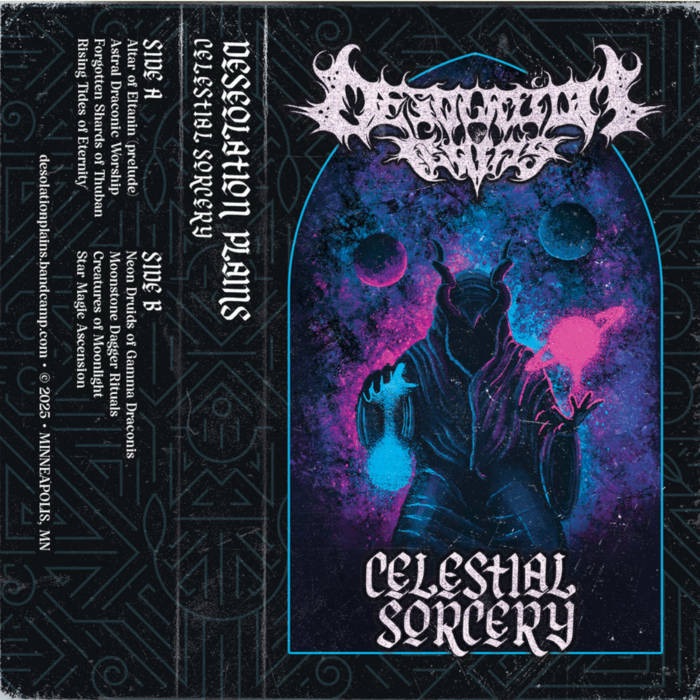
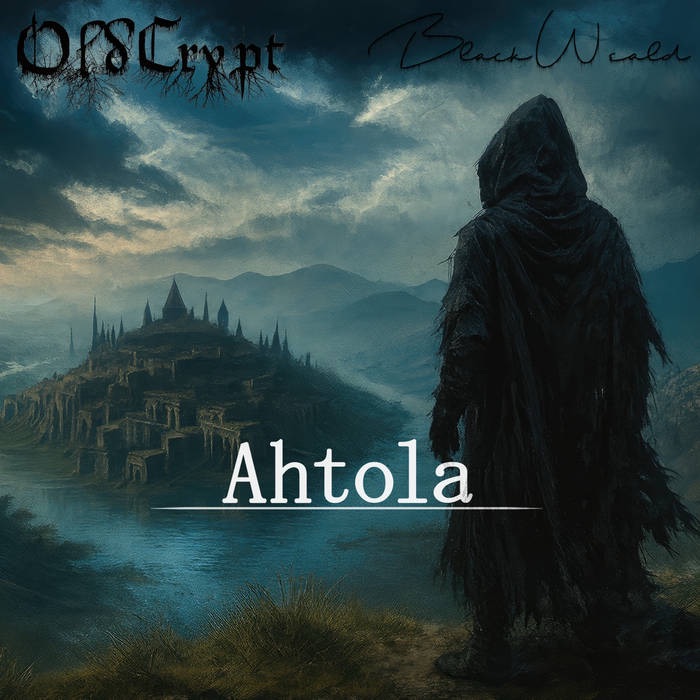
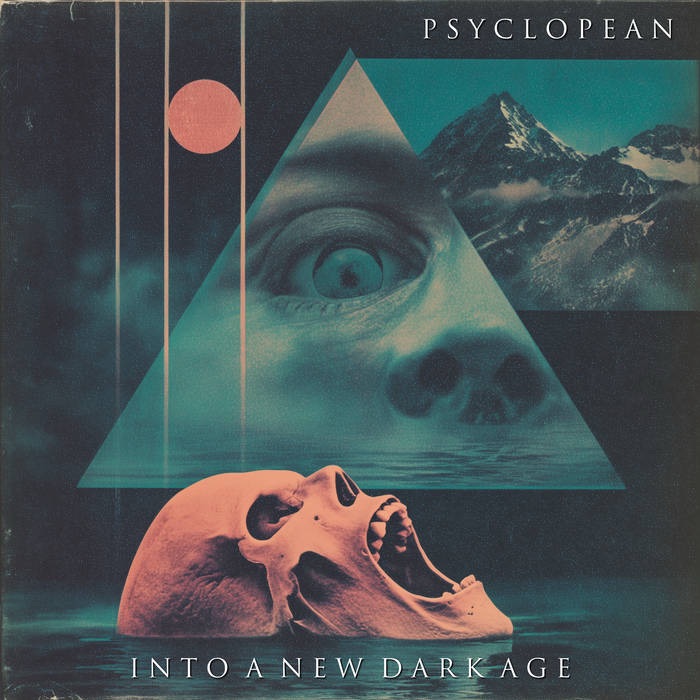
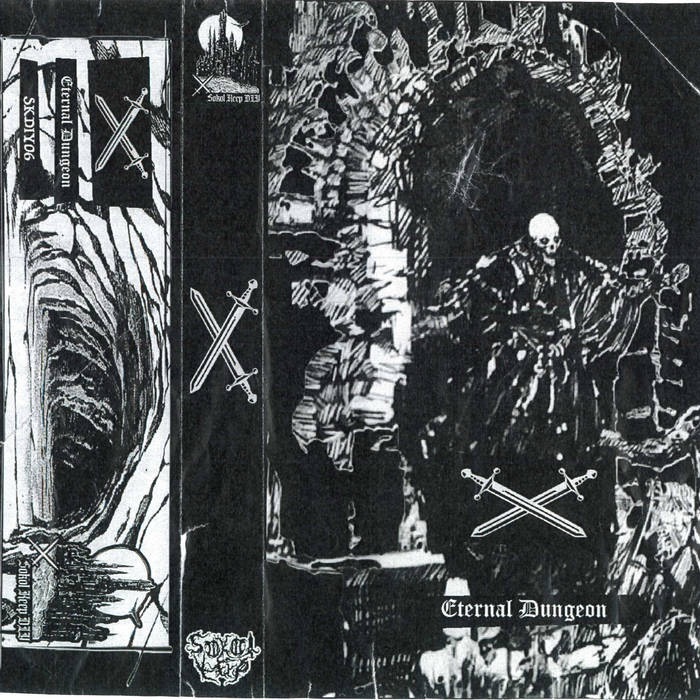
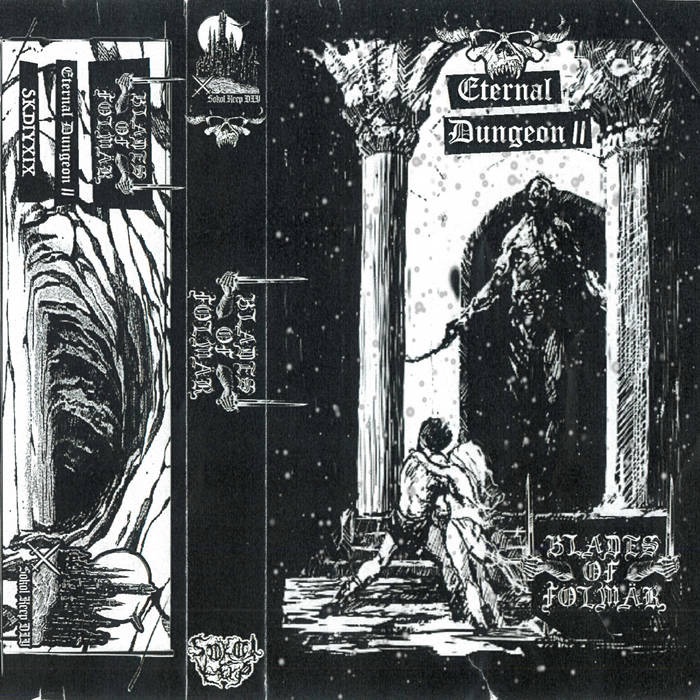



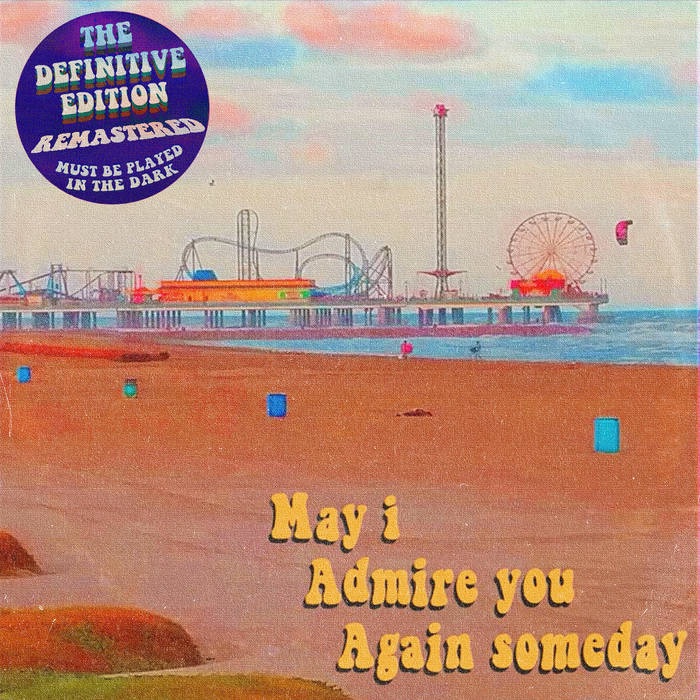
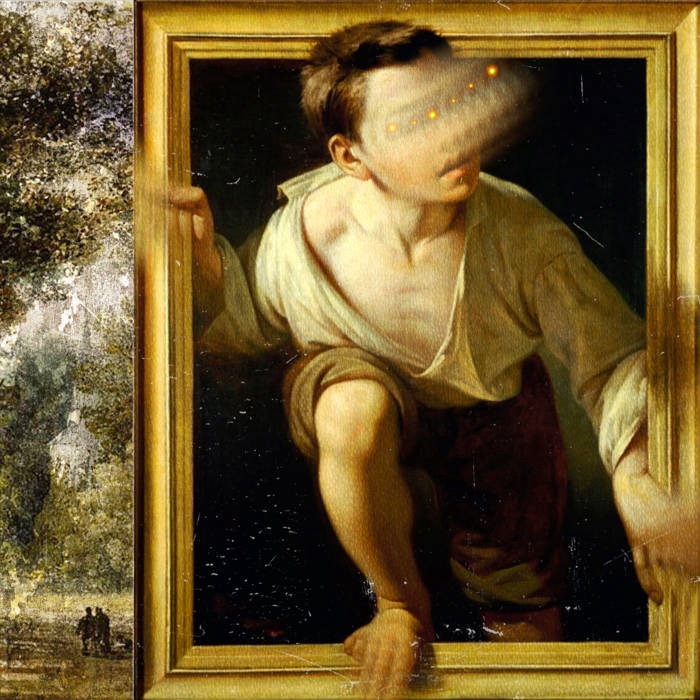
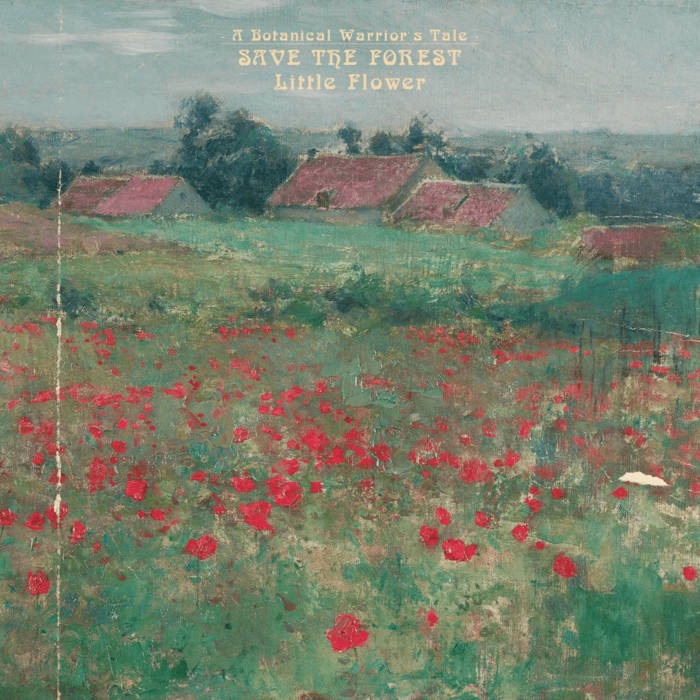
 Dungeon Synth & Dark Ambient Reviews!!